Brandon Read
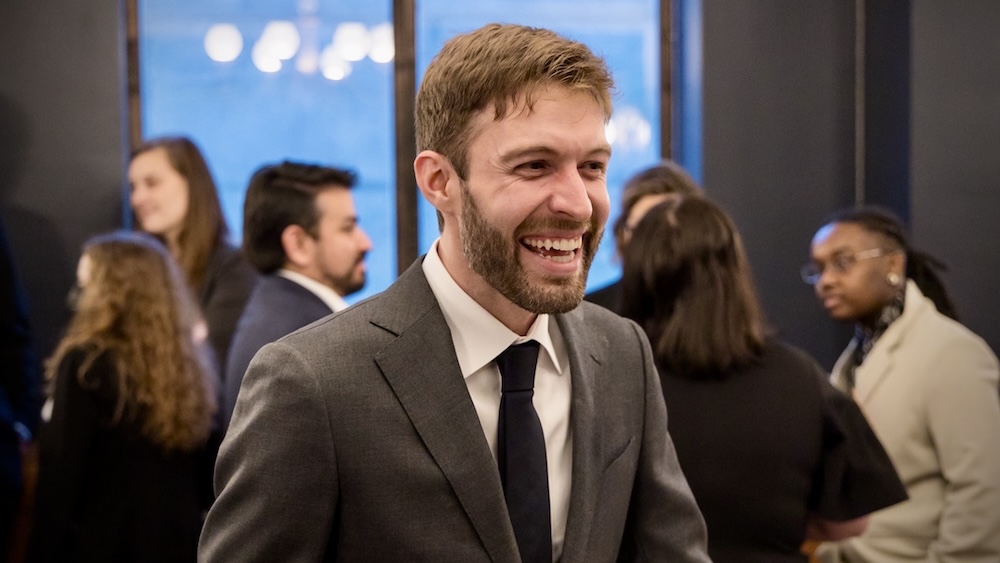
Dirksen Senate Office Building, Washington, D.C.
- Brandon is a policy professional based in Washington, D.C. with experience advising federal lawmakers to address emerging issues amid rapid technological change.
His areas of focus include steering industry toward responsible business conduct, intervening when unfair practices make it harder for others to get ahead, and responding thoughtfully to disruptive technologies that reshape paths to economic opportunity.
From 2024 to Spring 2025, Brandon served in the office of U.S. Senator Alex Padilla (D-California) as a Sr. Congressional Innovation Fellow. He advised on AI and tech policy broadly, including on matters under the Senate Judiciary Committee. Notably, he led the Senator’s oversight efforts pressing for meaningful safety investments from AI companion chatbot developers following multiple deaths linked to this emerging product category, and separately, began drafting legislation to strengthen labor protections across global AI value chains.
He’s since published and advised on policy briefs recommending oversight of: (1) AI companion apps developed by China’s largest AI and EdTech companies; and (2) Meta’s negligence toward older adult users, with a focus on AI character chatbots linked to the death of a 76-year-old man–and a broader call to action to center seniors and caregivers in the design, development, and deployment of AI-powered products entering their lives.
Brandon currently consults on efforts to advance independent third-party AI evaluations.
∗ ∗ ∗
Before Congress, Brandon briefly pursued graduate studies at Harvard, where courses on policy and law–including one taught by Obama-era FTC Chief Technologist Latanya Sweeney–prompted his pivot to government where he could drive immediate impact.
Prior to this academic detour, he'd built a career as a software engineer at Cisco, two growth-stage tech companies in Boston, and Lyft in San Francisco. These experiences led to his conceptual framework for “self-writing software” while exploring opportunities to translate professional insights into a viable commercial venture.
However, by the time the first investor meeting was scheduled, he’d grown concerned that tools of this nature would be adopted by dominant technology firms with a track record of recklessness–allowing them to move even faster while breaking even more things. He began asking the question: efficiency to what end?
He also worried that the broad adoption of these tools might rapidly deskill an entire workforce and reshape once reliable paths to the middle class into more stratified, precarious labor markets. These concerns were top-of-mind for Brandon given his tenure at Lyft had overlapped with the “Yes on 22” campaign, in which industry spent ~$200M to persuade California voters to deny full employee benefits to app-based workers–a move he disagreed with.
His misgivings were prescient: commercial efforts to automate software engineering have since commanded multibillion-dollar valuations, sending ripples across labor markets as businesses seek to increase productivity, while directing investments away from existing workforces–posing challenges to highly-skilled professionals, middle management, and entry-level workers alike.
Seeking to shape how this story would play out, Brandon shifted away from industry and toward public interest opportunities, determined to help write a different future.
∗ ∗ ∗
Brandon earned his B.S. in Computer Science from the University of Massachusetts, Amherst over a decade ago–the first in his family to attend college. From middle school through college, he worked with his brother landscaping commercial and residential properties, often alongside foreign-born workers who’d immigrated to New England from Latin America. It wasn’t until later in life that he would grow to appreciate that his coworkers’ kids might become the ones to power the next wave of American innovation or assume public office–resembling the trajectories of industry and government leaders he’s been lucky enough to work for. These early experiences taught him the importance of uplifting others and investing in durable pathways to opportunity–like Dev/Mission's pre-apprenticeship program in San Francisco and TechCongress fellowships in D.C.